Challenge
Middle and high school classrooms watch a lot of climate-science video. Retention on traditional video at that age range hovers low. NOVA wanted to test whether interactive 360° environments could move the engagement needle in a way that justified the production cost, before committing to a full Labs series.
Approach
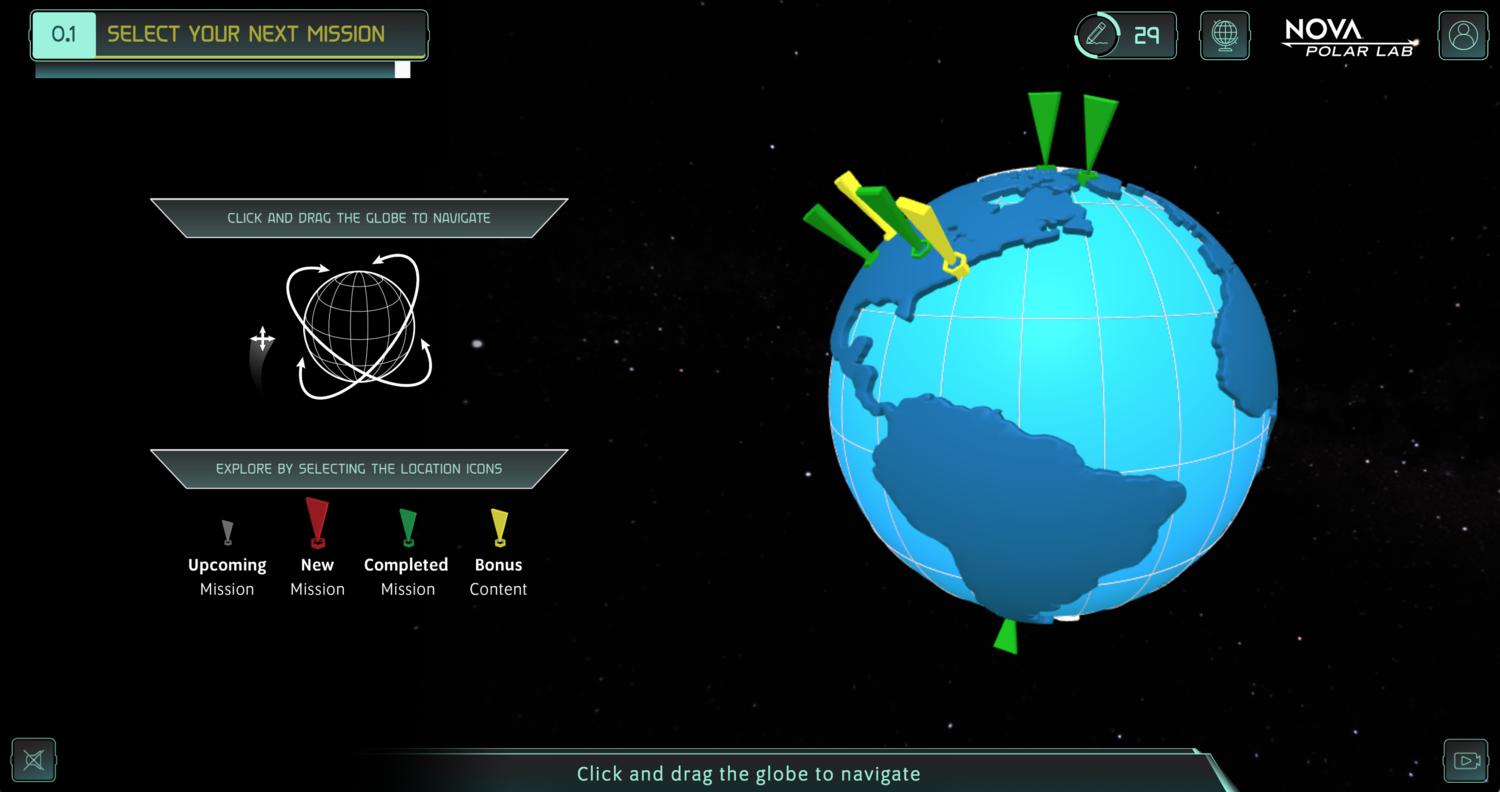
A WebGL 360° polar environment, gamified mini-mechanics tied to scientist interviews, and a teacher-facing curriculum guide that placed the experience inside lesson plans rather than alongside them. The whole experience ran in a browser without plugins or headsets, which kept the classroom IT bar low.
In postreality.ca terms, this engagement matches the Atlas tier: prove the immersive format works for the audience before NOVA committed to a Labs series.
Instrumentation
| KPI | Method | Notes |
|---|---|---|
| Classroom adoption | PBS LearningMedia analytics | Counted teacher-account uses |
| Student reach | Sessions × classroom size | Estimate, not validated census |
| Awards review | W3 Awards panel | External jury validation |
Result
| The Number | 6M+ students engaged |
| Tier | REPORTED |
| Source | PBS LearningMedia engagement data + classroom adoption counts |
W3 Awards Best in Show.
Impact
Polar Lab established the 360° lesson-bank pattern that NOVA reused for Exoplanet Lab and Financial Lab (partnered with Duke University’s Center for Advanced Hindsight). The pattern’s lifetime value across the Labs series outran its single-project budget by an order of magnitude.
What we’d do differently
We didn’t run a pre/post knowledge test alongside the 6M+ engagement number. The reach was the measurement; the learning gain was anecdote. Today’s Atlas tier always pairs engagement metrics with a small-n knowledge or behavior baseline, even at proof-of-concept scope, so we don’t lose the validated claim later.